Industrial sites deal with materials that ordinary cleaning methods cannot handle well. Dust, sludge, slurry, sediment, powders, wastewater, product residue and concrete build-up can collect around equipment, pits, tanks and production areas. When these materials are left in place, they can restrict access, interfere with maintenance and make routine site work harder. Industrial vacuuming provides a way to remove difficult materials without relying on slow manual methods.
What Is Industrial Vacuuming?
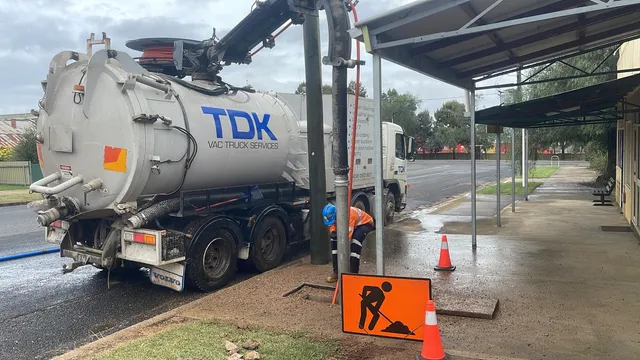
Industrial vacuuming is the use of powerful vacuum equipment to collect and remove wet or dry materials from commercial, civil and industrial environments. Depending on the job, a vacuum truck can handle materials such as sludge, sediment, powders, dust, slurry, liquid waste, drilling mud and accumulated product.
The main advantage is access. Hoses can reach pits, sumps, tanks, vessels, areas beneath conveyors and other locations where machinery or workers may have limited room to operate. This makes vacuum equipment useful when material needs to be removed from a difficult position without creating unnecessary disruption around the site.
Industrial vacuuming is not simply a larger version of household cleaning. Industrial work requires planning around the material, access, equipment, site conditions and disposal requirements. The right approach starts with understanding what has accumulated, where it is located and what needs to happen after removal.
Why Do Industrial Sites Need Vacuuming?
Accumulated material can become a practical problem long before it becomes an obvious one. Dust and residue may build up around production equipment, while sludge and sediment can settle in pits and sumps. Product spills can also spread into areas that are difficult to clean with standard equipment.
Regular removal can support cleaner work areas and make planned maintenance easier. It can also help crews reach equipment, surfaces and restricted areas without spending excessive time shifting material manually. For facilities operating to tight production schedules, reducing unnecessary cleaning time can be particularly useful.
Another reason is site control. Certain dusts and airborne contaminants can present health risks, so cleaning methods should be selected with the material and exposure risk in mind. Safe Work Australia recommends using appropriate controls for airborne contaminants and identifies industrial vacuum cleaners with suitable filtration as an engineering control during clean-up.
Common Materials Removed by Vacuum Equipment
The material collected during an industrial job varies widely from site to site. A vacuum system may be used for dry powders in one facility and wet sludge or slurry in another. Some projects involve mixed materials that require careful handling and a clear plan for collection and disposal.
Typical materials include dust, sediment, sludge, slurry, wastewater, concrete slurry, drilling mud, product residue and other industrial by-products. Spill clean-up may also involve unwanted product that has collected around machinery, floors, pits or loading areas.
For a well-planned vacuuming job, confirm these details before mobilization:
- Material type and approximate quantity
- Work area, access points and hose distance
- Whether the material is wet, dry, fine or mixed
- Required working hours or shutdown window
- Any known hazards, isolation rules or site restrictions
- Expected collection and disposal arrangements
Material type matters because it affects the equipment, hose arrangement, filtration, loading method and disposal process. A job involving heavy wet material has different requirements from one involving fine dry dust. Proper assessment before work begins helps avoid delays and ensures the equipment is suitable for the conditions.
Where Industrial Vacuuming Can Be Used
Industrial vacuuming can be useful across manufacturing, construction, civil works, processing, infrastructure and other demanding environments. It is particularly valuable where material has collected in locations that are difficult to reach using conventional cleaning equipment.
Pits and sumps are common applications because sediment, sludge and other material can settle at the bottom over time. Tanks, silos and vessels may also require vacuum removal when residue or product build-up needs to be cleared before maintenance, inspection or further use.
Conveyors and weighbridges can collect dust, mud, product and debris, especially in busy industrial environments. Vacuum equipment can help remove this build-up while reducing the need for workers to spend long periods manually moving material around operational areas.
Hard-to-access areas are another important application. Long hoses can allow the collection point to remain outside a restricted location while material is drawn from the work area. The exact method depends on site conditions, access, material and safety requirements.
| Industrial task | Typical material | Practical vacuuming benefit |
| Pit or sump cleaning | Sludge, sediment, wastewater | Removes settled material from deep areas |
| Tank or vessel cleaning | Residue, product build-up, sludge | Improves access for maintenance |
| Conveyor cleaning | Dust, product, debris | Clears build-up around operating equipment |
| Spill response | Wet or dry product | Collects unwanted material efficiently |
| Civil work clean-up | Slurry, drilling mud, sediment | Helps clear difficult work areas |
Industrial Vacuuming for Wet and Dry Materials
One of the useful features of industrial vacuum equipment is its ability to support both wet and dry material removal when the equipment is configured for the task. This gives site managers greater flexibility when dealing with changing conditions or different stages of a project.
Wet material can include sludge, slurry, sediment, wastewater and concrete-related residues. These materials may be heavy and difficult to move with ordinary pumps or manual tools, particularly when they have settled in a confined area.
Dry material can include dust, powders, product residue and loose debris. Fine material needs appropriate controls so that cleaning does not unnecessarily increase airborne dust. Safe Work Australia advises businesses to eliminate or minimize exposure to airborne contaminants and to use suitable control measures where hazards cannot be eliminated.
How the Vacuuming Process Works
A professional job normally begins with a site assessment. The operator needs to understand the material, access route, working area, volume, surrounding equipment and any site-specific controls. This information helps determine the suitable vacuum configuration and the practical way to approach the work.
Once the work area is prepared, hoses and equipment are positioned to reach the material. The vacuum system creates suction that draws the material through the hose into the collection system. Operators monitor the process and adjust the method where required as the material changes or the working conditions develop.
After collection, the material must be managed appropriately. Disposal requirements depend on what has been removed, where it came from and whether it has been classified as a regulated or controlled waste. Clear communication about the material before the job can help avoid problems later.
The process may be completed as a one-off clean-up, part of planned maintenance or during a larger shutdown. For facilities with recurring build-up, scheduled vacuuming can also become part of a broader maintenance program.
Benefits of Professional Industrial Vacuuming
Professional vacuum equipment can save time when large quantities of material need to be removed from difficult areas. Instead of relying entirely on workers with shovels, buckets or small cleaning machines, vacuum systems can move material directly into a collection unit.
It can also reduce disruption around active worksites. Equipment can often be positioned outside the immediate work area while hoses reach the material. This can be helpful where space is limited or where access around machinery must be maintained.
Another benefit is consistency. A planned vacuuming method gives the site team a clear process for collection, handling and removal. This can be especially useful during shutdowns, maintenance projects and clean-up work where several contractors may be working in the same area.
Industrial vacuuming can also support housekeeping objectives. Removing accumulated material from operational areas may make surfaces easier to inspect and maintain. It does not replace a site’s wider safety system, risk assessment or cleaning procedures, but it can form an important part of them.
During planned maintenance, vacuuming can be coordinated with other site activities. Clearing accumulated material before inspection or repair gives workers better access to the asset and makes the work area easier to manage. Timing should be agreed with the site supervisor.
Industrial Vacuuming and Workplace Safety
Cleaning methods should always be selected with workplace risks in mind. Dust and other airborne contaminants can affect workers if they are released into the breathing zone. Safe Work Australia states that businesses should eliminate risks where possible and otherwise minimize exposure so far as reasonably practicable.
Industrial vacuuming can be one part of that control approach, particularly where suitable equipment and filtration are used. However, the correct method depends on the material and the conditions. Personal protective equipment, isolation, ventilation, exclusion zones and other controls may also be required.
For this reason, industrial cleaning should not be treated as a simple housekeeping task. Site procedures, risk assessments and relevant work health and safety requirements should guide how the job is planned and performed.
Conclusion
Industrial vacuuming provides a practical way to remove wet and dry materials from demanding industrial environments. From pits, sumps and tanks to conveyors, vessels and restricted areas, vacuum equipment can help manage material that is difficult to remove manually.
The right service starts with understanding the material, access conditions, site risks and project schedule. When properly planned, vacuuming can support maintenance, shutdowns, spill response and routine industrial cleaning while reducing unnecessary manual handling.
If your site needs reliable removal of sludge, slurry, dust, sediment, product residue or other difficult materials, contact TDK Industrial Services to discuss the work. Request a site assessment or quote and provide details about the material, location, access and timing so the team can recommend a practical solution.
FAQs
1. What is industrial vacuuming used for?
Industrial vacuuming is used to remove wet and dry materials such as sludge, slurry, sediment, dust, powders, wastewater, product residue and industrial debris. It is commonly used in pits, tanks, silos, vessels, conveyors and other difficult-to-access areas.
2. Can vacuum equipment remove both wet and dry materials?
Yes, suitable industrial vacuum systems can be configured for different wet and dry materials. The correct equipment depends on the material, volume, access conditions and required filtration or handling arrangements.
3. Is industrial vacuuming suitable for shutdown work?
Yes. Vacuum services can support planned shutdowns by clearing accumulated material from tanks, vessels, pits, conveyors and production areas before inspection, maintenance or repair work begins.
4. How should a site prepare for industrial vacuuming?
Provide information about the material, estimated quantity, work location, access conditions, operating equipment and required timing. If the material may be hazardous or contaminated, that information should be shared before the job is planned.
5. How often should industrial vacuuming be carried out?
There is no single schedule for every site. Frequency depends on production activity, material build-up, equipment design and maintenance requirements. Sites with recurring accumulation may benefit from planned vacuum cleaning as part of preventative maintenance.